

The Intellectual Life Of Edmund Burke
The Intellectual Life Of Edmund Burke
Author : Bromwich, David
Publisher : Belknap Press
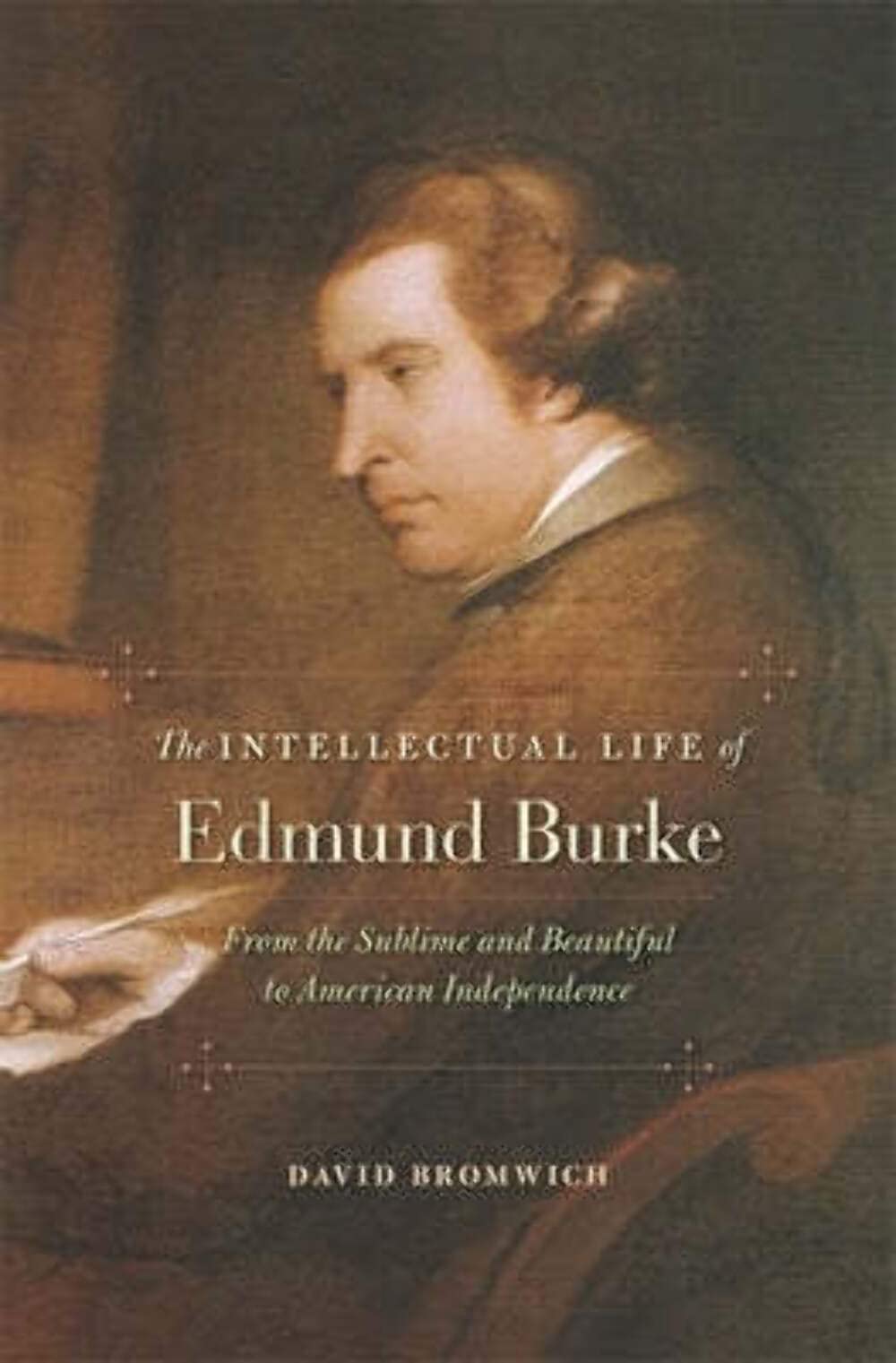
Product Description David Bromwich’s portrait of statesman Edmund Burke (1730–1797) is the first biography to attend to the complexity of Burke’s thought as it emerges in both the major writings...
SKU
9780674729704Sub total
Rs. 3,119.00Couldn't load pickup availability
Estimated delivery 5-7 days
People are viewing this right now
Description
Product Description
David Bromwich’s portrait of statesman Edmund Burke (1730–1797) is the first biography to attend to the complexity of Burke’s thought as it emerges in both the major writings and private correspondence. The public and private writings cannot be easily dissociated, nor should they be. For Burke?a thinker, writer, and politician?the principles of politics were merely those of morality enlarged. Bromwich reads Burke’s career as an imperfect attempt to organize an honorable life in the dense medium he knew politics to be.This intellectual biography examines the first three decades of Burke’s professional life. His protest against the cruelties of English society and his criticism of all unchecked power laid the groundwork for his later attacks on abuses of government in India, Ireland, and France. Bromwich allows us to see the youthful skeptic, wary of a social contract based on “nature”; the theorist of love and fear in relation to “the sublime and beautiful”; the advocate of civil liberty, even in the face of civil disorder; the architect of economic reform; and the agitator for peace with America. However multiple and various Burke’s campaigns, a single-mindedness of commitment always drove him.Burke is commonly seen as the father of modern conservatism. Bromwich reveals the matter to be far more subtle and interesting. Burke was a defender of the rights of disfranchised minorities and an opponent of militarism. His politics diverge from those of any modern party, but all parties would be wiser for acquaintance with his writing and thoughts.
Review
[
Bromwich] gives us a figure who may be unknown to readers familiar with Burke only from ‘Reflections on the Revolution in France’ or his reputation as modern conservatism’s founding father. Bromwich’s Burke is one for whom ‘ordinary feelings such as trust, though they have a Christian correlative, themselves supply a sufficient groundwork of moral conduct.’ Burke is moved more by a universal sympathy for human struggle than by religion or patriotism… Though his attention throughout is on Burke’s moral psychology, Bromwich also highlights the literary character of his thought, including his debts to Milton and Shakespeare… In Burke’s politics there was room alike for elite rule and street demonstrations of the Tea Party or Occupy Wall Street variety. This balance of familiar and strange, Burke’s enlightened humanity and his intricate understanding of power, make him well deserving of the extensive treatment he has lately received?and especially of the justice David Bromwich has rendered him in showing Edmund Burke in the most unexpected of lights. -- Daniel McCarthy ?
New York Times Book Review
It is
David Bromwich’s aim in
The Intellectual Life of Edmund Burke that people should know a good deal more about what Burke actually said and wrote…Bromwich’s patient and subtle exposition is a continuing delight. After reading this first volume, several major misreadings of Burke and a more general ignorance of his arguments and actions will not be possible, or at any rate won’t be legitimate…
The Intellectual Life of Edmund Burke is both indispensable and unputdownable, and with its companion volume will surely form a lasting landmark. -- Ferdinand Mount ?
London Review of Books
[A] recent biographer of Burke calls him the father of conservatism. So a reappraisal of his early works is welcome. David Bromwich, a professor at Yale University, has written a history of Burke’s thought until American independence; a more liberal Burke emerges from this book…Burke continued to fight for liberty later on in life. He backed Americans in their campaign for freedom from British taxation. He supported Catholic freedoms and freer trade with Ireland, in spite of his constituents’ ire. He wanted more liberal laws on the punishment of debtors. He even pushed to curb the slave trade in 1780, a quarter of a century before it was abolished. ?
The Economist
In
The I