

Speaking With Nature
Speaking With Nature
Author : Ramachandra Guha
Publisher : Fourth Estate In
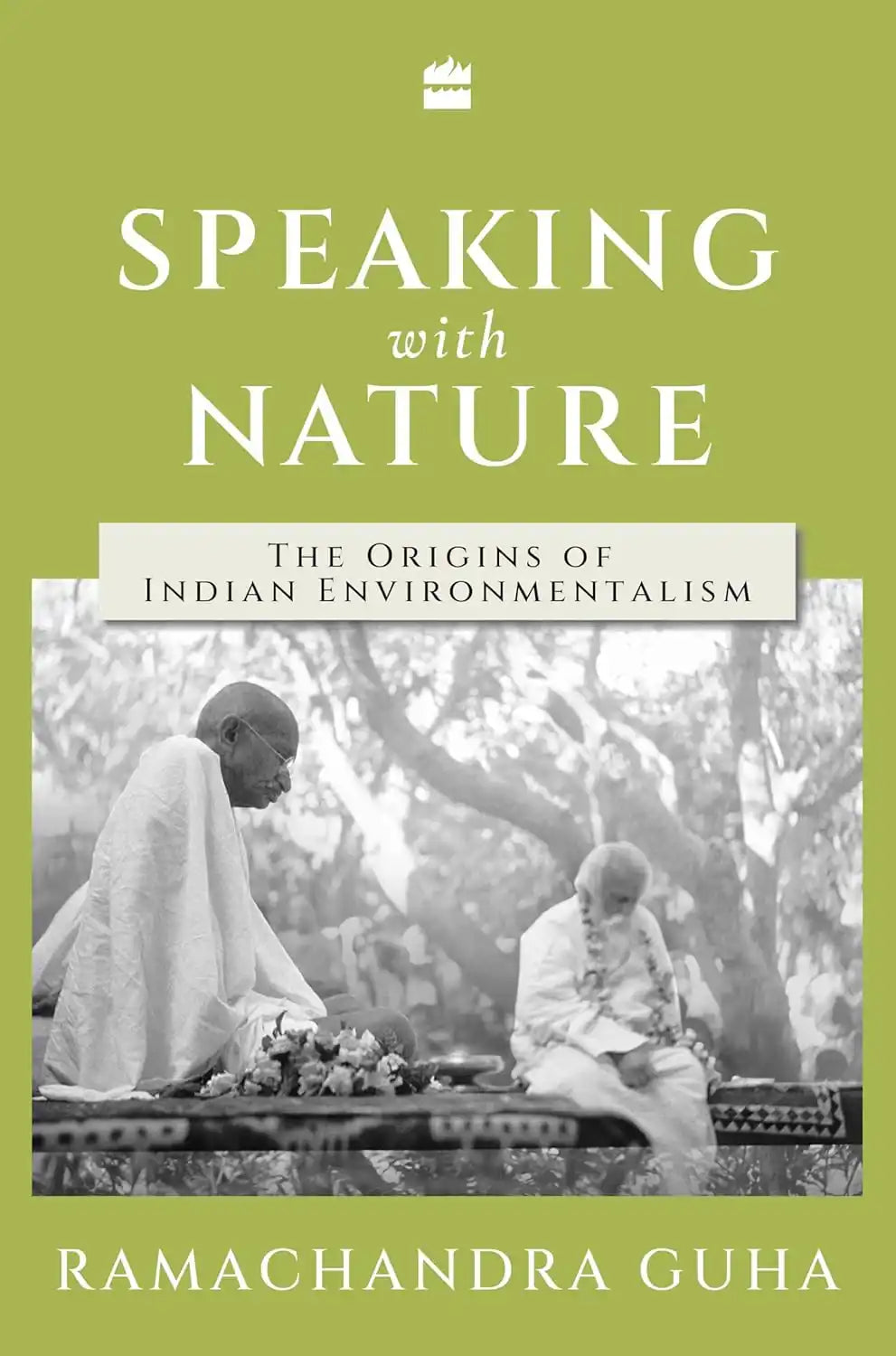
In Speaking with Nature, Ramachandra Guha dismantles the conventional belief that countries like India lack environmental consciousness due to poverty, offering instead a compelling and deeply researched account of India’s...
SKU
9789369893430Sub total
Rs. 560.00Couldn't load pickup availability
Estimated delivery 5-7 days
People are viewing this right now
Description
In Speaking with Nature, Ramachandra Guha dismantles the conventional belief that countries like India lack environmental consciousness due to poverty, offering instead a compelling and deeply researched account of India’s rich ecological legacy. Long before Rachel Carson’s Silent Spring and the global discourse on climate change, ten visionary individuals—Rabindranath Tagore, Radhakamal Mukerjee, J.C. Kumarappa, Patrick Geddes, Albert and Gabrielle Howard, Mira, Verrier Elwin, K.M. Munshi, and M. Krishnan—wrote with striking clarity about the perils of environmental degradation within the Indian context. Guha introduces the concept of ‘livelihood environmentalism’, contrasting it with the ‘full-stomach environmentalism’ of affluent nations, and highlights how these thinkers shaped global conversations on humanity’s relationship with nature. Spanning over a century of Indian history and drawing transnational connections, the book offers vital insights into today’s climate crisis. Ramachandra Guha, born in the Himalayan foothills and educated in Delhi and Kolkata, is a renowned historian and author of acclaimed works such as The Unquiet Woods, India After Gandhi, and a two-volume biography of Mahatma Gandhi. His writings have been translated into over twenty languages, and he has held prestigious academic positions at institutions like Stanford, the London School of Economics, and the Indian Institute of Science. Currently Distinguished University Professor at Krea University, Guha has received numerous accolades, including the Sahitya Akademi Award, the Fukuoka Prize, and an honorary doctorate from Yale University.