

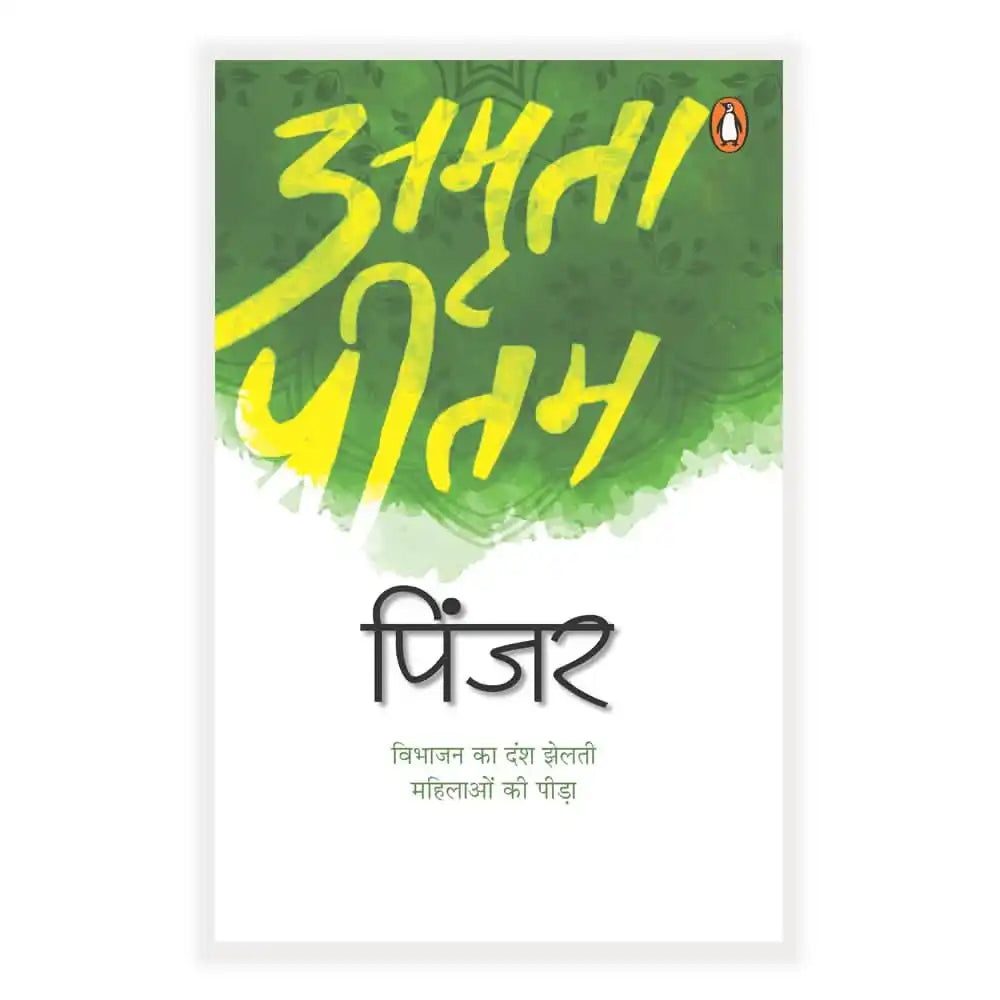
Pinjar / Pritam; Pritam Hindi
Pinjar / Pritam; Pritam Hindi
Author : Pritam, Amrita
Publisher : Penguin Random House
Pinjar, meaning “skeleton,” strips life down to its bare essence—no shape, no form, no mind, no will—just the skeleton. Yet within this bare frame lies the story of India during...
SKU
97893534900723 In stock
Sub total
Rs. 200.00Couldn't load pickup availability
Estimated delivery 5-7 days
People are viewing this right now
Description
Pinjar, meaning “skeleton,” strips life down to its bare essence—no shape, no form, no mind, no will—just the skeleton. Yet within this bare frame lies the story of India during the era of freedom and partition, focusing on the part that became Pakistan.
In Pinjar, we witness the pain, suffering, anguish, sacrifice, and maternal love of women, intertwined with the crimes and remorse of men. The narrative spans Hindus and Muslims, capturing the agonies of partition.
Amidst religious fanaticism, the novel emphasizes human values and compassion. Guided by these values, the heroine ultimately forgives the sins of all, accepting the harsh realities of the present, and rises anew, embracing the boundless possibilities of the future.
This is a story of resilience, humanity, and redemption, exploring the costs of division and the strength to move beyond it.