

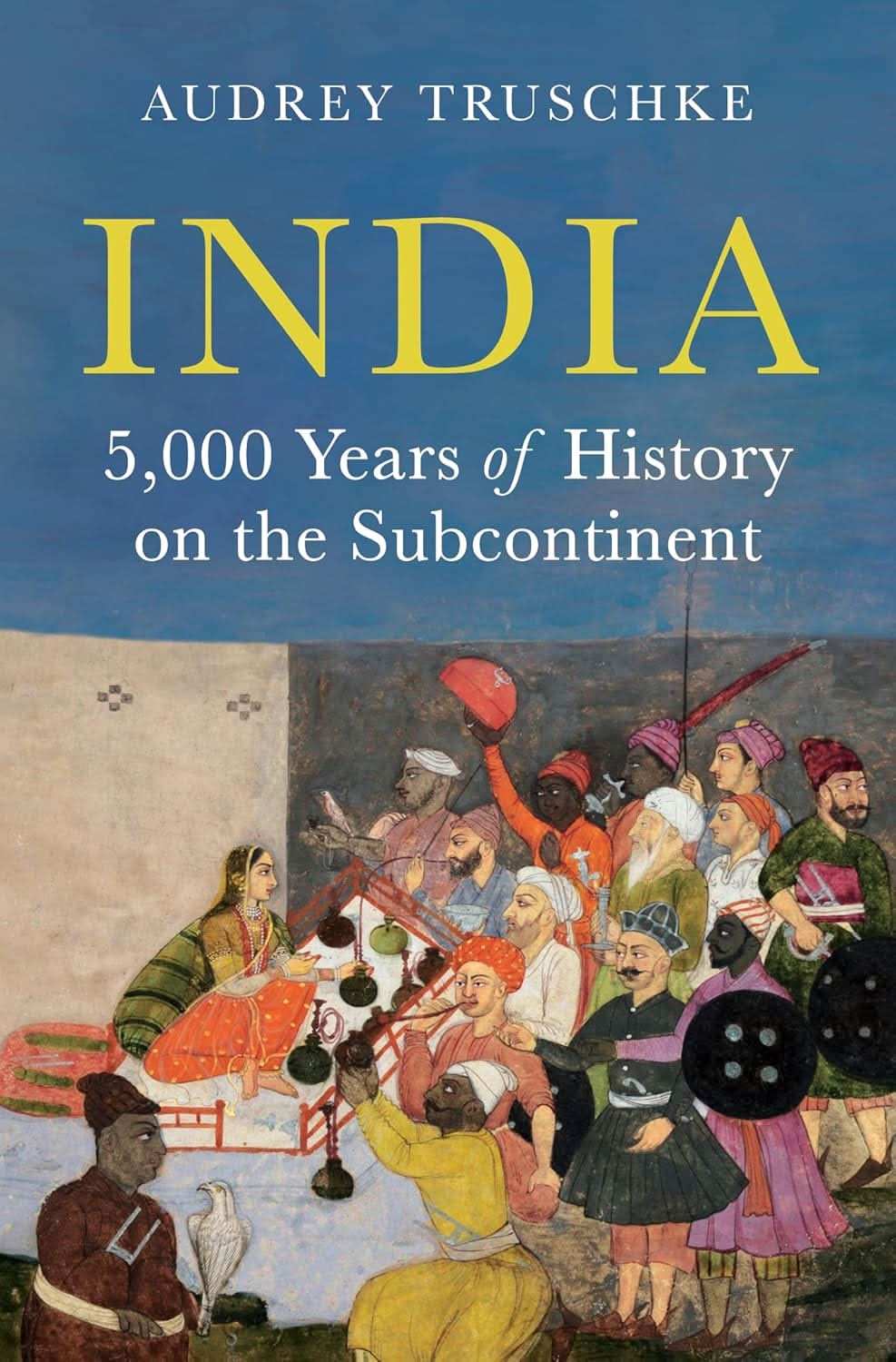
India: 5,000 Years of History on the Subcontinent
India: 5,000 Years of History on the Subcontinent
Author : Audrey Truschke
Publisher : Princeton University Press
Author: Audrey Truschke Publisher: Princeton University Press Language: English Format: Hardcover Pages: 712 Book Details A dazzling new history of the Indian subcontinent and its diverse peoples in global context...
SKU
978069127742420 In stock
Sub total
Rs. 1,039.00Couldn't load pickup availability
Estimated delivery 5-7 days
People are viewing this right now
Description
- Author: Audrey Truschke
- Publisher: Princeton University Press
- Language: English
- Format: Hardcover
-
Pages: 712
Book Details
A dazzling new history of the Indian subcontinent and its diverse peoples in global context — from antiquity to today.
Much of world history is Indian history. Home to one in four people today, the Indian subcontinent has long been densely populated and deeply connected to Asia, Africa, Europe, and the Americas through migration and trade.
In this magisterial and accessible history, Audrey Truschke tells the rich and complex story of the region historically known as India — encompassing present-day India, Pakistan, Bangladesh, and parts of Afghanistan — and the people who have lived there across five millennia.
This engaging narrative covers:
-
The rise and evolution of major religions: Hinduism, Buddhism, Jainism, Islam, and Sikhism
-
Foundational texts and empires: the Vedas, Mahabharata, Ashoka, the Mauryan Empire, Chola rule, Indo-Persian governance, the Mughal Empire
-
Global connections through trade and the Silk Road
-
European colonialism, the struggle for national independence, and the tragic Partition of 1947
-
Contemporary issues: the rise of Hindu nationalism, climate change, and India’s role in the modern world
Throughout, the book emphasizes the diversity of human experience on the subcontinent — including the voices of women, religious minorities, lower classes, and other marginalized groups.
Truschke reminds readers that India’s past remains deeply contested and continues to shape current events and debates.
About the Author
Audrey Truschke is Professor of South Asian History at Rutgers University–Newark.
She is the bestselling author of Aurangzeb: The Life and Legacy of India’s Most Controversial King and other works on Indian history.
She earned her Ph.D. in 2012 from Columbia University, and her research focuses on the cultural, imperial, and intellectual history of early modern and modern India (circa 1200 to the present).