

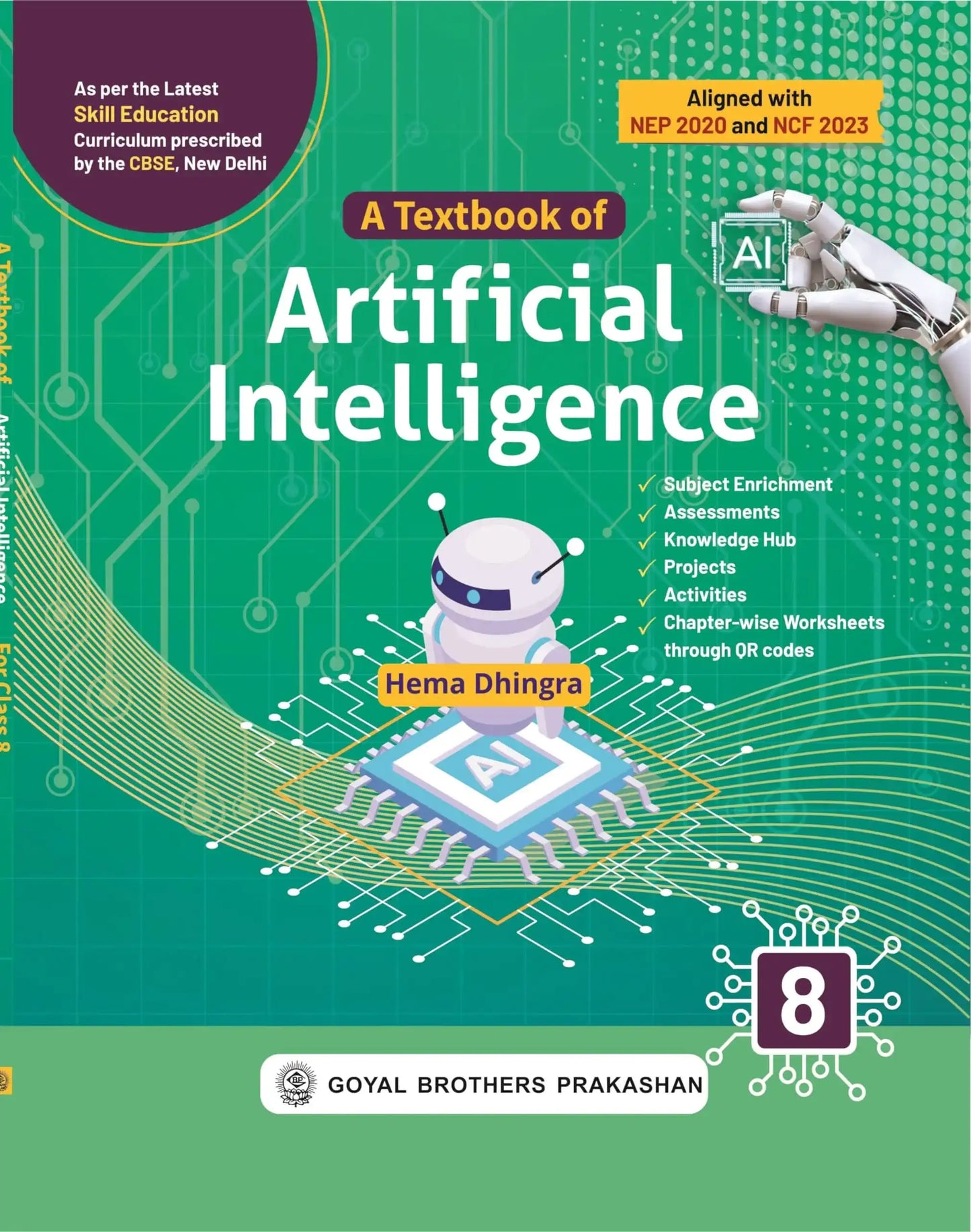
Gbp Artificial Intelligence Bk 8
Gbp Artificial Intelligence Bk 8
Author : GBP Editorial Panel
Publisher : Goyal Brothers
The term Artificial Intelligence (AI) may sound intimidating to some but it has been in use for decades, and its applications are more common than you might imagine. It is...
SKU
9789389749311Sub total
Rs. 387.00Couldn't load pickup availability
Estimated delivery 5-7 days
People are viewing this right now
Description
The term Artificial Intelligence (AI) may sound intimidating to some but it has been in use for decades, and its applications are more common than you might imagine. It is in the spotlight across applications in our personal and professional lives. AI is still at a relatively early stage of development, so the range of its potential applications has ample scope left for further development. It holds the promise of solving some of the most pressing issues faced by the society, but, at the same time, it also presents challenges such as unethical use of data and potential job displacement. There are so many amazing ways artificial intelligence and machine learning are used behind the scenes to impact our everyday lives. AI assists us in each and every area of our lives, whether we're trying to read our emails, get driving directions or get music or movie recommendations. AI is a constellation of technologies that enable machines to act with higher levels of intelligence and emulate the human capabilities to sense, comprehend and act. AI is not specifically related to computer science. It is a field of study that encompasses human behaviour, biology, psychology and even language and linguistics. AI presents opportunities to complement and supplement human intelligence and enrich the way people live and work. Artificial Intelligence is being widely recognised to be the power that will fuel this future global digital economy. Countries around the world are becoming increasingly aware of the potential benefits of developing and applying AI. From Siri to self-driving cars, Artificial Intelligence (AI) is progressing rapidly. While science fiction often portrays AI as robots with human-like characteristics, AI can encompass anything from Google's search algorithms to IBM's Watson to autonomous weapons. From Amazon shopping recommendations,